SARED25 Conference Recap
We believe in the power of knowledge and data to drive better economic and social development.

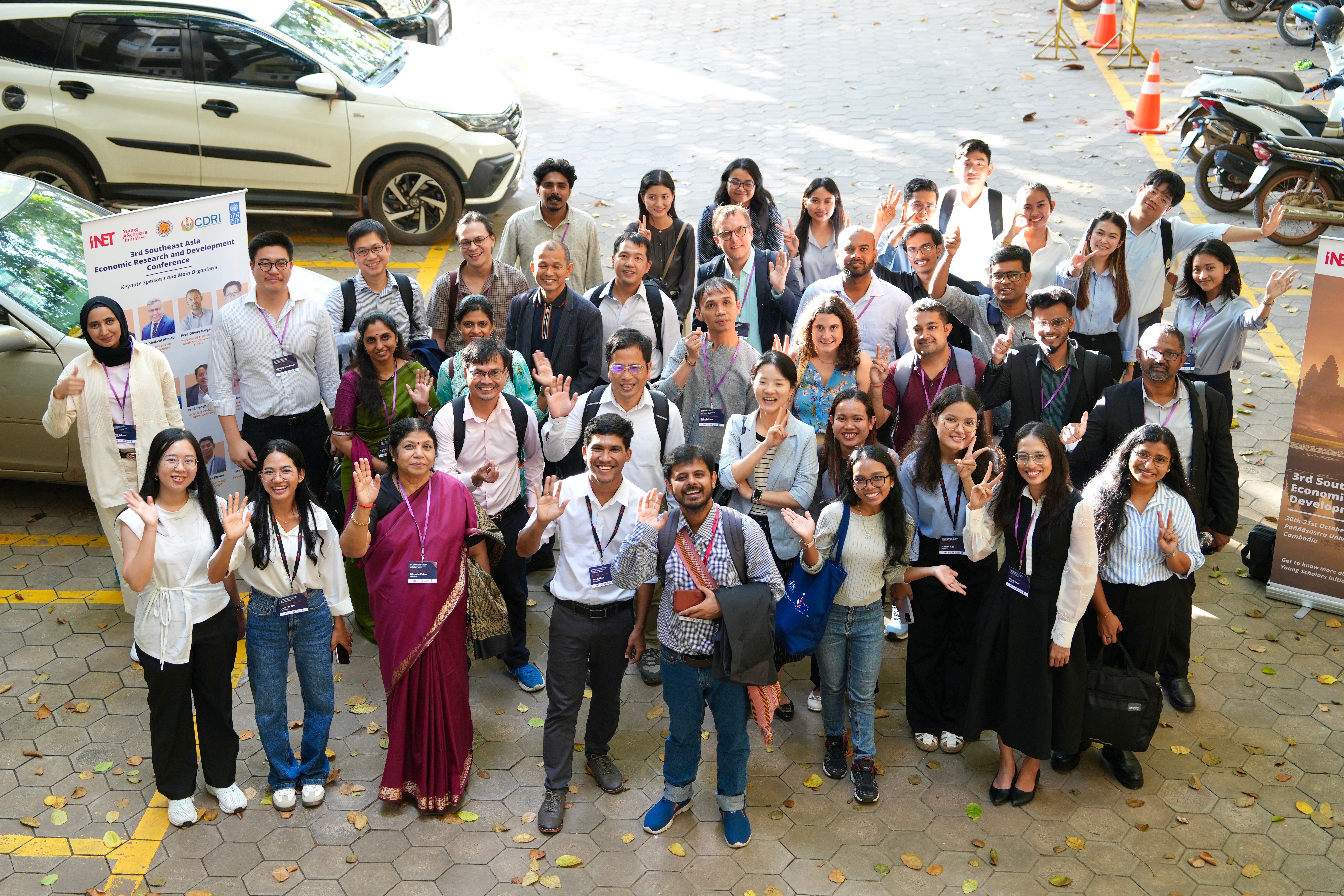
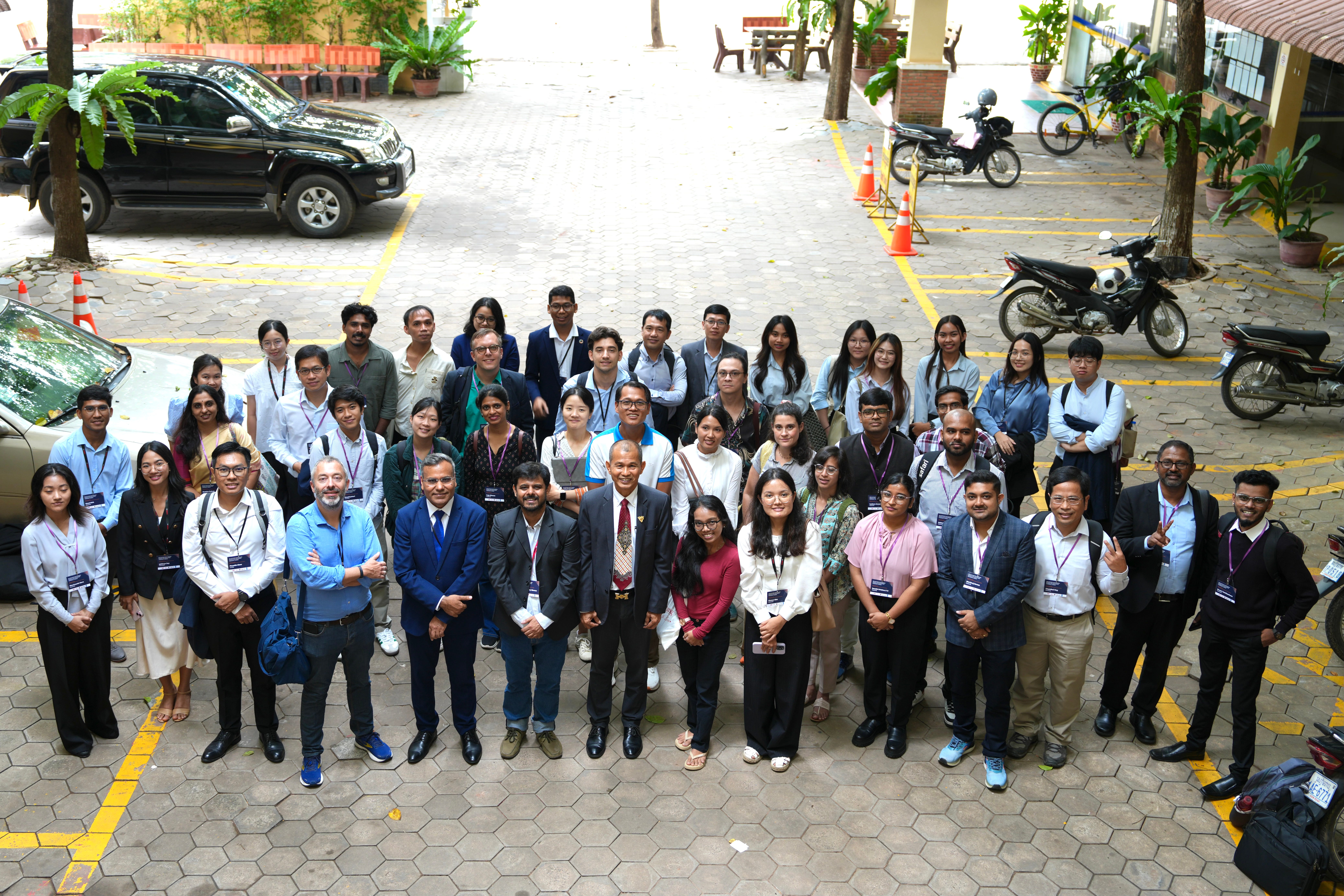
On 30–31 October 2025, the 3rd Southeast Asia Economic Research and Development Conference (SAERD25) was held at Paññāsāstra University of Cambodia, Siem Reap Campus, Siem Reap, Cambodia. The conference brought together 57 participants (40.35% female), including young scholars, early-career researchers, economists, and practitioners from Benin, Brunei, Cambodia, China, France, India, Italy, Japan, Malaysia, the Netherlands, the Philippines, and the UK, to discuss economic research and development in Southeast Asia.
Southeast Asia stands at the crossroads of dynamic economic progress and persistent socio-economic challenges. While the region has achieved remarkable growth, regional integration, and poverty reduction, these progresses have also been accompanied by rising inequality (both between and within countries), environmental degradation, technological disruptions, and increasing vulnerability to global uncertainties and climate change. These realities raise critical questions: How can Southeast Asia balance rapid economic growth with social equity, ecological sustainability, and digital transformation? How can research on the region enhance our understanding of the socio-economic status of Southeast Asia’s member states?
We believe that addressing these polycrises requires innovative, multidimensional solutions that go beyond traditional economic paradigms. In this sense, SAERD25 provided a platform for critical thinkers to convene, exchange perspectives, and propose actionable solutions tailored to the region’s unique context. The conference aims to inspire collaborative research that rethinks growth, sustainability, and equity through an interdisciplinary and pluralist lens. It seeks to foster dialogue that integrates economic theory, empirical analysis, and practical policy interventions. By drawing on insights from diverse disciplines and methodologies, we hope participants will deepen their understanding of the complex interactions shaping Southeast Asia’s socio-economic landscape.
Outcomes
Keynote lectures
The conference engaged participants in discussions on economic development in the world, and especially in Cambodia. Two keynote lectures were delivered: one on the Global Measurement of Inequality and another on Global Multilateralism and Protectionism.
In the first lecture, Prof. Olivier Bargain, Professor of Economics at Bordeaux University, France, presented empirical evidence showing significant gender gaps in individual consumption across 45 low- and middle-income countries, indicating that child poverty remains substantial. These disparities are not fully explained by household needs or scale economies. Prof. Bargain also explained that a large share of global inequality stems from unequal resource sharing within households. Using dimensional analysis, he showed that combinations of ancestral cultural norms, beyond geography or religion, shape women’s agency, identifying both restrictive norm mixtures and more progressive hybrid environments. This approach offers practical “tags” for identifying gender discrimination risks and informing targeted policies.
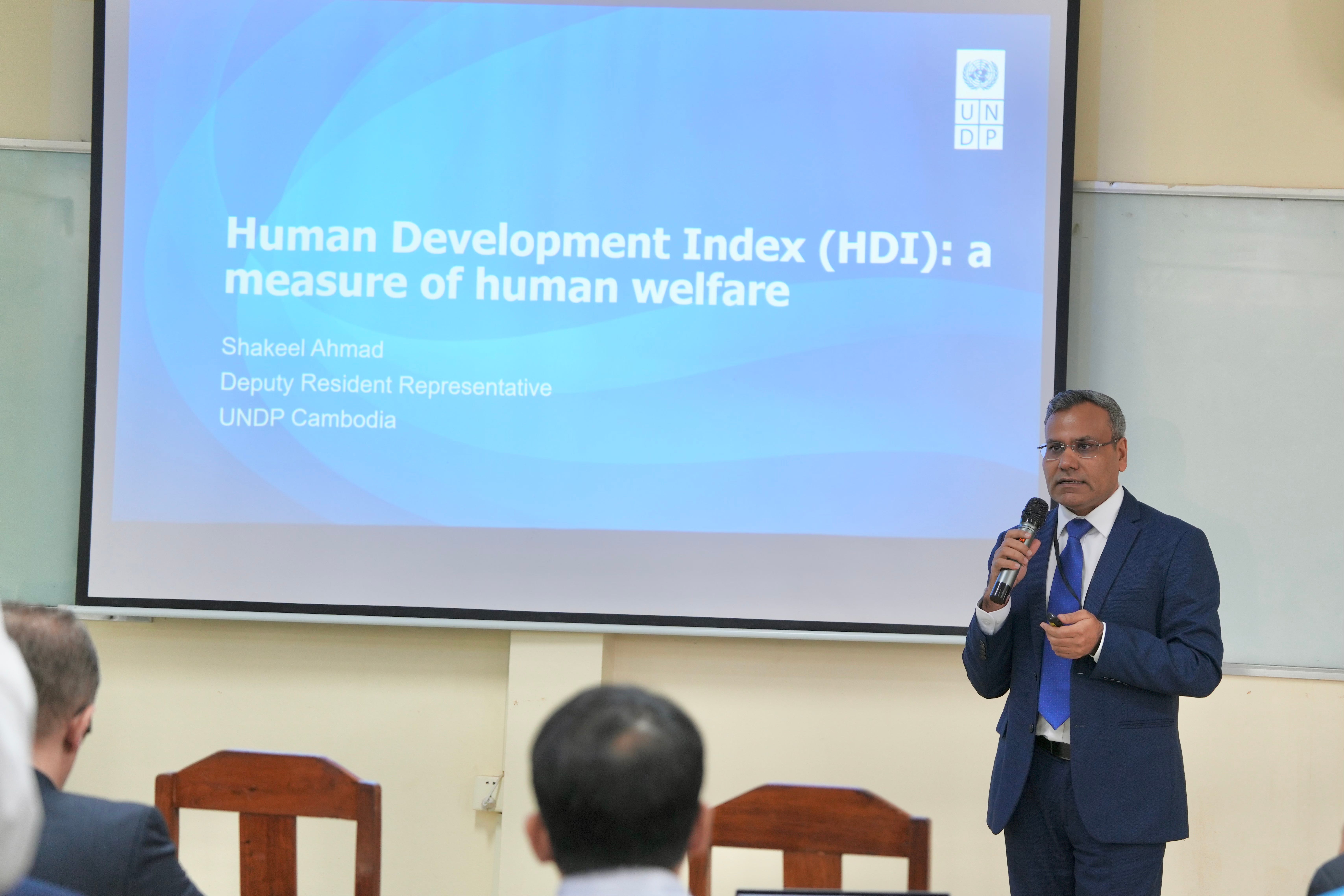
The second lecture, delivered by Mr. Shakeel Ahmad, Deputy Resident Representative of UNDP Cambodia, focused on the Human Development Index (HDI). He noted the limitations of GDP as a measure of human progress, emphasizing that “not everything that counts can be counted.” GDP overlooks non-market activities, the informal economy, in which a large share of workers in developing countries, especially women, are engaged. Also, it excluded the essential elements of well-being as environmental quality, health and life expectancy, income distribution, and safety. The lecture highlighted HDI as a simple but powerful composite of health, education, and living standards. Using global evidence and Cambodia’s steady HDI improvements as an example, Mr. Ahmad demonstrated how investments in people yield long-term gains. He called for a systemic reset in development strategies, emphasizing mainstreaming human development, recalibrating growth models, expanding people’s choices, strengthening human security, and fulfilling responsibilities to future generations.
Panel discussions
Following the keynote lectures, the first panel discussion focused on Green Economics and Social Development: Opportunities and Challenges. Dr. Sattwick Dey Biswas, Coordinator of History of Economic Thought at the Young Scholars Initiative, moderated the session with three panelists: Prof. Phanith Chou, Associate Professor of Environmental Economics at the Royal University of Phnom Penh, Cambodia; Mr. Theara Khoun, Socio-economic Policy Specialist at UNDP Cambodia; and Dr. Daniel Yonto, Assistant Professor at Xi’an Jiaotong-Liverpool University, China. The panel indicates key lessons and challenges in climate transition, green technology, and economic development. Panelists emphasized that historical industrial transitions, as seen in Germany and the U.S., show that economic restructuring can trigger social and political challenges, requiring careful planning and social support. Successful models, such as China’s experience with sustained economic growth and electrification of transport, illustrate the importance of top-down policy support, community engagement, and knowledge transfer programs like the Science and Technology Backyard. In Southeast Asia, countries such as Cambodia, Vietnam and Indonesia face constraints including limited infrastructure, low adoption of electric vehicles, and weak coordination between national and local governments. Effective policies, financial incentives, and trust between government and communities were highlighted as critical, while access to finance and private sector investment remain major barriers. Panelists noted that assessing impact, particularly for non-market outcomes such as environmental improvements and quality of life, requires clear indicators and pilot projects. Regional cooperation and support from international partners were identified as key enablers for strengthening capacity in green finance, technology transfer, and sustainable growth.
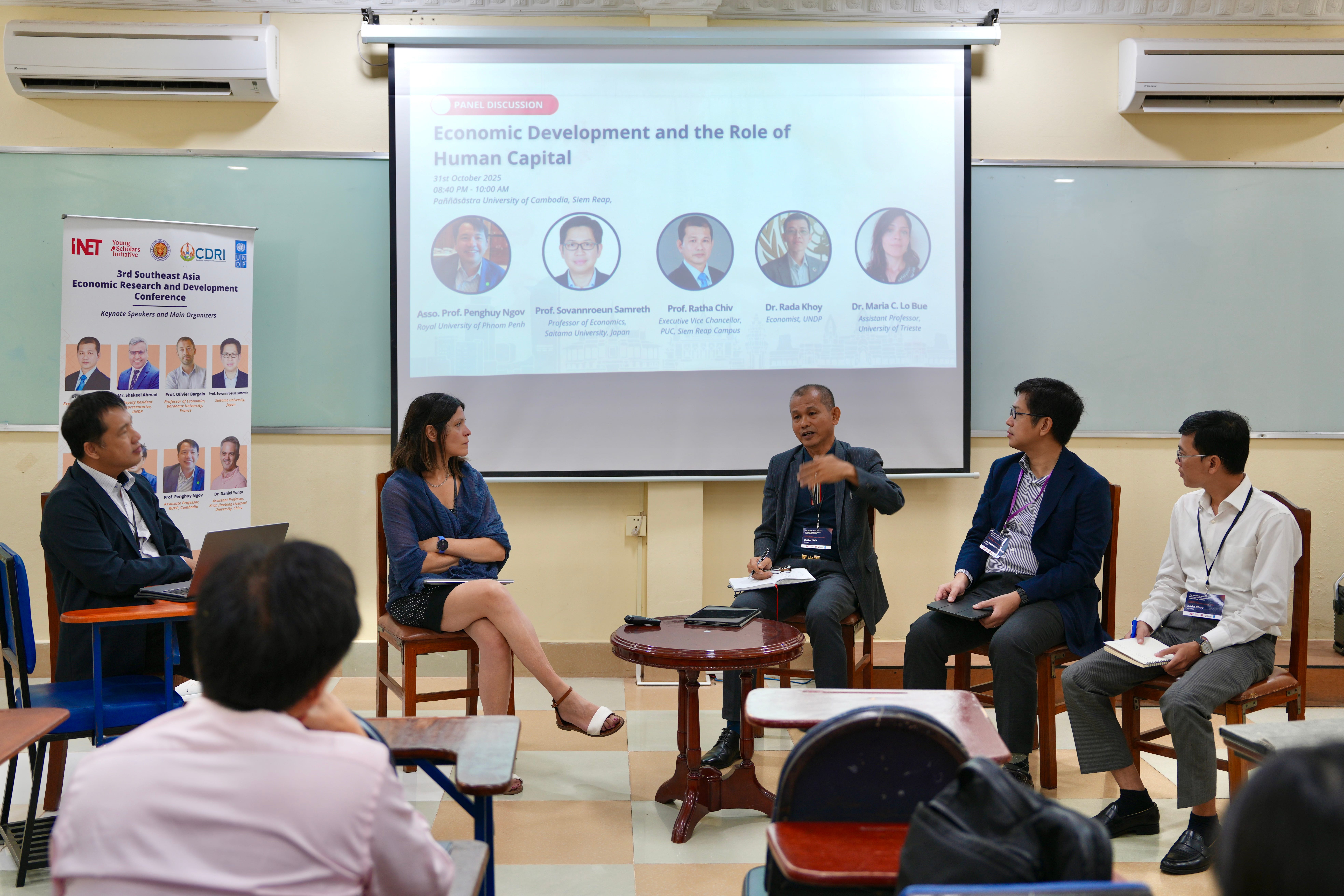
The second panel, held on the second day, discussed Economic Development and the Role of Human Capital. Moderated by Prof. Penghuy Ngov, Associate Professor at the Royal University of Phnom Penh, Cambodia, the panel featured four panelists: Prof. Sovannroeun Samreth, Professor of Economics at Saitama University, Japan; Dr. Ratha Chiv, Executive Vice Chancellor at Paññāsāstra University of Cambodia, Siem Reap Campus, Cambodia; Dr. Rada Khoy, Economist at UNDP Cambodia; and Prof. Maria C. Lo Bue, Associate Professor at the University of Trieste, Italy. Prof. Lo Bue presented her research on maternal work and children’s development based on 40 years of empirical evidence, showing that 77% of studies indicate no negative impact of maternal employment on child development, rising to 86% after applying multiple hypothesis testing. Focusing on the 29 most causal studies yielded similar results (75–84%). Negative effects were mainly associated with full-time work or long hours (e.g., over 55 hours per week in Tanzania) and low-quality employment, while high-quality work correlated with better outcomes. The panel noted that the childcare environment and financial returns to maternal work are particularly relevant in poorer settings, whereas in wealthier contexts, family income, informal support, and government safety nets can offset the need for maternal income. Early maternal employment, particularly in a child’s first year, may reduce cognitive gains, especially in mathematics.
Extending on these findings, the discussion focused on Cambodia’s education development, crucial for transforming the economy from labor-intensive to skill-based. Panelists identified significant skill gaps in technical fields such as engineering and IT, digital literacy, and soft skills, including leadership and communication, with pronounced rural-urban disparities. Although high dropout rates have improved, misalignment of education and training with industry needs continues to hinder progress, leaving sectors such as manufacturing, construction, tourism, and IT struggling to find qualified workers. Automation and digitalization are reshaping job roles, increasing demand for analytical, digital, and adaptive skills. Inclusive access to education and training was emphasized as a key strategy, with recommendations to expand digital infrastructure, provide vocational training and scholarships, and strengthen partnerships with the private sector to ensure curricula reflect labor market demands. Drawing lessons from other countries, the panel underscored the importance of early investment in human capital, high-quality education, and continuous skill development. Evidence-based approaches, including those highlighted by Dr. Lo Bue on early childhood development, show that coordinated government policies, industry-aligned education, and support for technology-driven skill acquisition can enhance workforce readiness and drive long-term economic competitiveness.
Parallel sessions
Beyond the senior scholars’ lectures and panel discussions, the conference provided valuable opportunities for young scholars to present their research and receive feedback from senior academics and participants. Presenters included undergraduate and graduate students, early-career researchers without a PhD, PhD students, and mid-career researchers. Their work covered diverse topics across 14 parallel sessions (37 presentations), including monetary and industrial policy, social well-being, labor and gender economics, food security and rural development, small business and productivity, agricultural economics, economic inequality, human capital, green economics, trade and political economy, health economics, gender economics, economic policy, and environmental economics. The design of these parallel sessions was distinctive, as it integrated not only traditional academic research presentations but also policy-oriented studies and emerging research ideas. This format allowed participants from different backgrounds to learn about both innovative research topics and methodologies, particularly in local contexts, offering valuable lessons and insights.
Networking
The conference also intentionally fostered networking and future collaboration through two network dinners, lasting approximately two hours each, and informal gatherings at bars until late at night. These settings, while informal, encouraged meaningful interactions and discussions, enabling participants to build relationships, exchange ideas, and explore both critical and engaging topics in a relaxed environment.
Next steps
Moving forward, the organizers plan to reach out to potential participants to invite contributions to the special issue of the conference, with initial meetings and communications expected to take place before the end of this year. At the same time, we will have a short break and come back with the preparation for the fourth conference, scheduled next year. Building on the continued support from YSI, the organizers also aim to collaborate with UNDP once again, while actively exploring additional partners and sponsors to ensure the success, impact, and sustainability of the upcoming event. These efforts are intended to strengthen research networks, promote knowledge exchange, and provide ongoing opportunities for scholars and practitioners to engage with critical economic and social issues in the region.
Appreciation
Special thanks to our supporters, including the Young Scholars Initiative, Cambodia Development Resource Institute, United Nations Development Programme, and Paññāsāstra University of Cambodia, Siem Reap Campus, whose generous support made this conference possible. The conference was organized by Kosal Nith (Young Scholars Initiative and CDRI), with contributions from Sattwick Dey Biswas (Young Scholars Initiative), Sovannroeun Samreth (Saitama University), Sokhimmarya Chea (Royal University of Law and Economics), Jakkrya Sey (Cambodia Development Resource Institute), Sreymeng Sros (Royal University of Law and Economics), Sinoun Him (Ministry of Post and Telecommunications), and Kean Muny Nhim (Cambodia Development Resource Institute). The academic committee, responsible for reviewing and evaluating submitted papers, included Dr. Rada Khoy, Economist at UNDP Cambodia; Mr. Theara Khoun, Socio-economic Policy Specialist at UNDP Cambodia; Prof. Phanith Chou, Associate Professor of Environmental Economics, Royal University of Phnom Penh, Cambodia; Dr. Daniel Yonto, Assistant Professor, Xi’an Jiaotong-Liverpool University, China; and Prof. Sovannroeun Samreth, Professor, Saitama University, Japan. We extend our sincere gratitude to all keynote speakers, panelists, and participants for their invaluable contributions, active engagement, and dedication, which collectively ensured the success and impact of the 3rd Southeast Asia Economic Research and Development Conference.